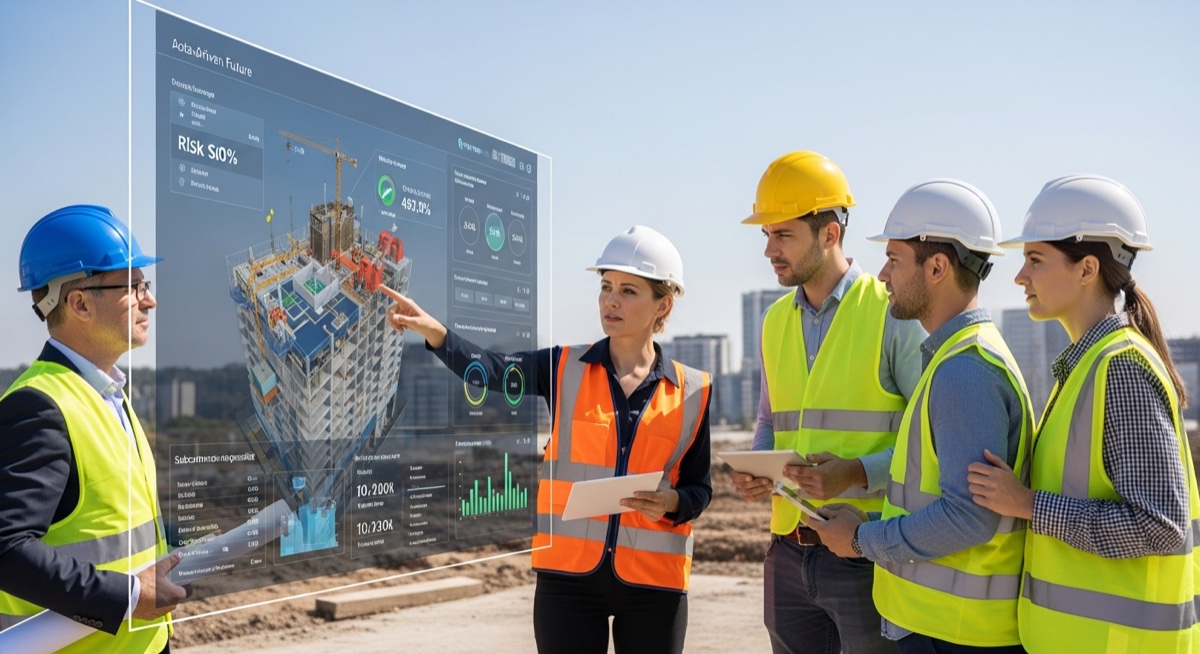
Mitigating Subcontractor Risk: An AI-Driven Approach to Prequalification
The foundation of any successful construction project lies in the reliability of its subcontractors. Yet, traditional prequalification methods—manual document reviews, reference checks, and financial statement audits—are often insufficient, leaving GCs and specialty subs vulnerable to significant financial and schedule risks. In today's complex construction landscape, a more robust, data-driven approach is not just an advantage; it's a necessity. AI is transforming how we assess and mitigate subcontractor risk, moving beyond surface-level checks to predictive analytics.
The Evolving Landscape of Subcontractor Risk
Subcontractor failure is a primary driver of project delays, cost overruns, and litigation. Risks range from financial insolvency and poor past performance to inadequate insurance coverage, non-compliance with safety standards, or even a history of disputes. Consider a scenario where a seemingly competitive bid of $1.2 million from a new concrete subcontractor is accepted. Without deep-dive prequalification, you might miss a recent undisclosed mechanic's lien filed against them on another project, or an active lawsuit for non-performance. This oversight can quickly escalate into a $300,000 cost overrun to re-mobilize a replacement, not to mention substantial schedule impacts.
Traditional methods, reliant on historical data, struggle to predict future behavior or uncover subtle red flags. They are resource-intensive, prone to human error, and often provide an incomplete picture, particularly with newer or less transparent firms. The sheer volume of documentation required for comprehensive due diligence often overwhelms project teams, leading to shortcuts that amplify risk.
Beyond Basic Checks: AI for Deeper Insights
AI-driven prequalification moves beyond static data. It aggregates and analyzes vast datasets—financial statements, legal filings, public records, industry news, past project performance, and even social sentiment—to create a dynamic, holistic risk profile. For instance, AI can flag a subcontractor whose balance sheet shows declining working capital coupled with an increasing number of outstanding invoices, indicating potential liquidity issues long before they become critical. It can also quickly identify inconsistencies between provided documents and publicly available information.
One critical area where AI excels is in dissecting contractual language. Subcontract agreements are often repositories of hidden risks, from unfavorable indemnity clauses to ambiguous scope definitions. Manually reviewing these can be tedious and prone to missing critical details. AI-powered tools can instantly identify these high-risk provisions.
Hidden Indemnity Clauses
Be vigilant for clauses that disproportionately shift liability. An AI-powered Contract Review engine can flag language like "Subcontractor shall defend, indemnify, and hold harmless Contractor from any and all claims, liabilities, and expenses, regardless of Contractor's sole negligence." This attempts to make the subcontractor responsible even for the GC's own errors, a significant and often uninsurable risk.
By leveraging AI, firms can standardize their prequalification process. Trueleveler’s RFQ Generator can create structured RFQs that ensure consistent data collection from all prospective subcontractors, streamlining the initial information gathering phase and feeding clean data into AI analysis engines.
Proactive Risk Identification and Mitigation
The real power of AI in prequalification is its ability to be proactive. Instead of reacting to problems, you can anticipate them. AI models can predict the likelihood of subcontractor default, performance issues, or even safety incidents based on a multitude of factors, allowing you to make informed decisions about who you partner with. This predictive capability translates directly into tangible project savings.
Consider a situation where a subcontractor's standard contract includes an escalation clause tied to specific material costs. Manually, this might be overlooked, leading to unexpected cost increases down the line. An AI-driven Contract Review would immediately highlight this clause, allowing for negotiation or a more accurate project budget upfront. This proactive identification can prevent a $75,000 material cost overrun on a mid-sized project.
Stop Missing Critical Contractual Details
Trueleveler's Contract Review engine uses AI to detect high-risk clauses in minutes, not days.
Furthermore, AI can continuously monitor subcontractors post-award. Public record changes, new litigation, or even adverse news mentions can trigger alerts, enabling project managers to intervene before minor issues become major crises. Trueleveler's PM Contract Summary can extract key obligations and dates from subcontractor agreements, ensuring that performance milestones and compliance requirements are tracked, providing an early warning system for potential defaults.
Real-World Impact: Enhancing Project Stability
Implementing an AI-driven prequalification process directly impacts project stability and profitability. By vetting subcontractors more thoroughly and continuously monitoring them, GCs and specialty subs reduce the likelihood of costly disruptions. For example, avoiding a single subcontractor default on a $5 million project could save an average of 15-20% of the contract value in recovery costs and liquidated damages, equating to $750,000 to $1 million.
Trueleveler’s full suite of tools enhances this stability. Beyond initial risk assessment, our Bid Leveling engine allows you to compare up to five vendor quotes from pre-qualified subs, ensuring you get the best value from reliable partners. Post-award, the Document Compare engine can flag discrepancies between purchase orders and invoices, preventing erroneous payments and ensuring financial accuracy. This comprehensive approach, powered by AI, transforms subcontractor management from a reactive headache into a proactive, strategic advantage.
Streamlined Prequalification
By automating the data aggregation and initial risk scoring, project teams can reduce the time spent on manual prequalification by up to 60%, allowing them to focus on critical strategic analysis rather than data entry. This efficiency gain directly translates to faster project starts and reduced overhead.
The Bottom Line
Subcontractor risk is an inherent part of construction, but its impact is no longer unmanageable. AI provides the tools necessary to move beyond traditional, often insufficient, prequalification methods. By leveraging advanced analytics, firms can gain unprecedented visibility into their potential partners, identify risks proactively, and make data-backed decisions that safeguard project timelines and budgets.
The future of construction procurement is intelligent and proactive. Embracing AI for subcontractor prequalification is not just about adopting new technology; it's about building more resilient projects, fostering stronger partnerships, and securing a competitive edge in an increasingly demanding industry. Explore how Trueleveler’s comprehensive AI-powered platform can transform your risk management strategy today.
The bottom line
Construction procurement moves fast. The teams that win more work and protect their margins review contracts carefully, level bids accurately, and catch scope gaps before award — not after. Trueleveler's five AI engines handle the reading and comparison so your team can focus on the decisions.
Upload your first document free at trueleveler.com — free to start, results in under 4 minutes.